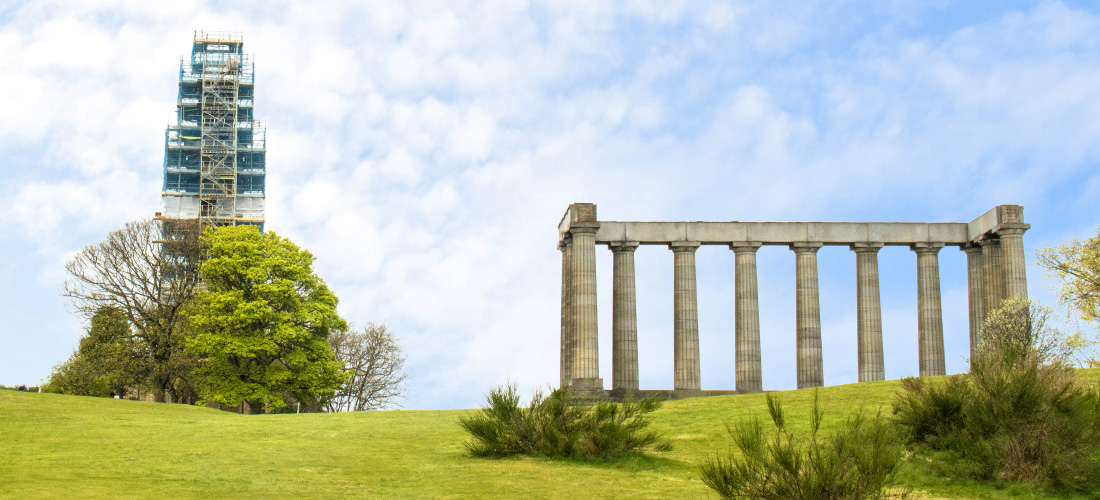
Nelson Monument - Calton Hill
Provision of a specially designed temporary access solution supported by X-Beams to enable Ashwood Scotland to carry out restoration and refurbishment works on an iconic A-listed landmark tower.
The Nelson Monument, constructed between 1807 and 1816 to honour Vice-Admiral Nelson for his victory at the Battle of Trafalgar in 1805, was originally designed as a signal mast manned by sailors. This historic landmark is now a Category A-listed building. Designed by architect Robert Burn, the tower resembles an inverted telescope and stands atop a pentagonal castellated base at the highest point of Calton Hill.
In 1853, Charles Piazzi Smyth, Astronomer Royal for Scotland, added a wooden timeball covered in zinc. This timeball was vital for ships navigating the Firth of Forth and the Port of Leith, enabling them to adjust their clocks and set chronometers accurately. Weighing approximately 90kg, the timeball was raised daily before 1pm and lowered precisely at 1pm, synchronised with the One O’Clock Gun at Edinburgh Castle.
The Nelson Monument stands 32 metres (105 feet) tall and features 143 steps leading to a public viewing gallery, offering one of the finest panoramic views of Edinburgh. Visitors can see across the city to the Pentland Hills, the Firth of Forth, and Fife.
The monument is now open to the public and hosts exhibitions.

Project Summary
Ashwood Scotland, a specialist contractor supporting clients in the conservation and restoration of heritage buildings and listed monuments to preserve their historical integrity, was engaged for this project. Enigma’s Glasgow Access depot erected a specially designed access solution around the Nelson Monument on top of Calton Hill, Edinburgh, before work commenced.
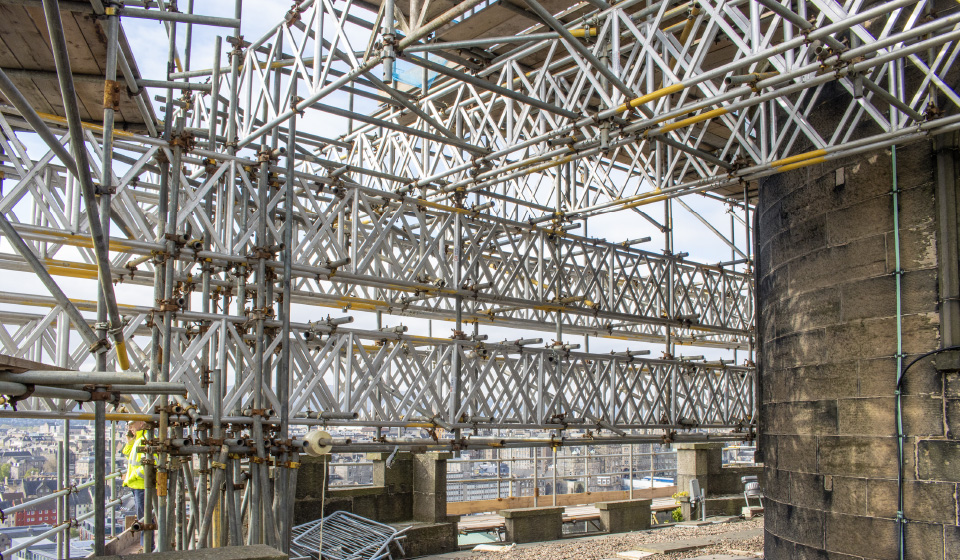
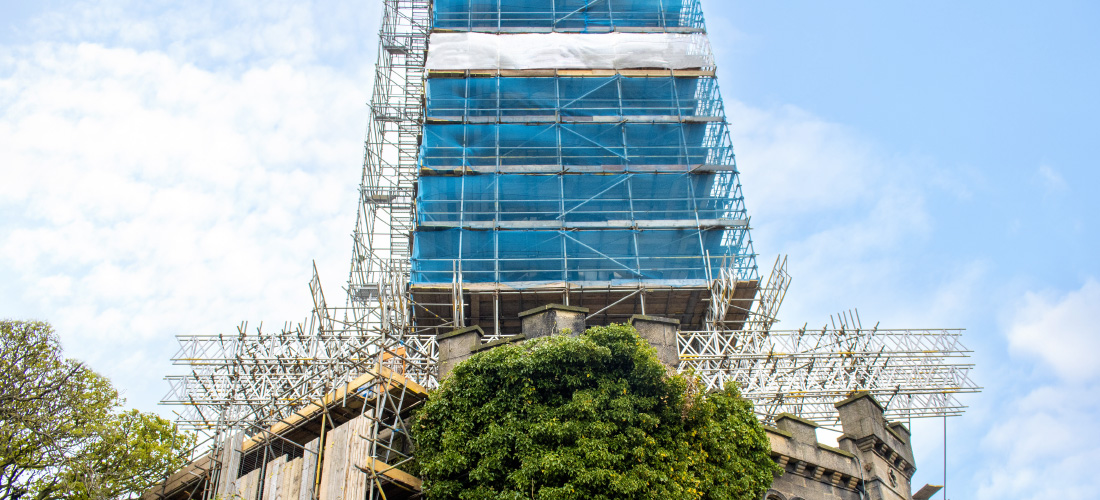
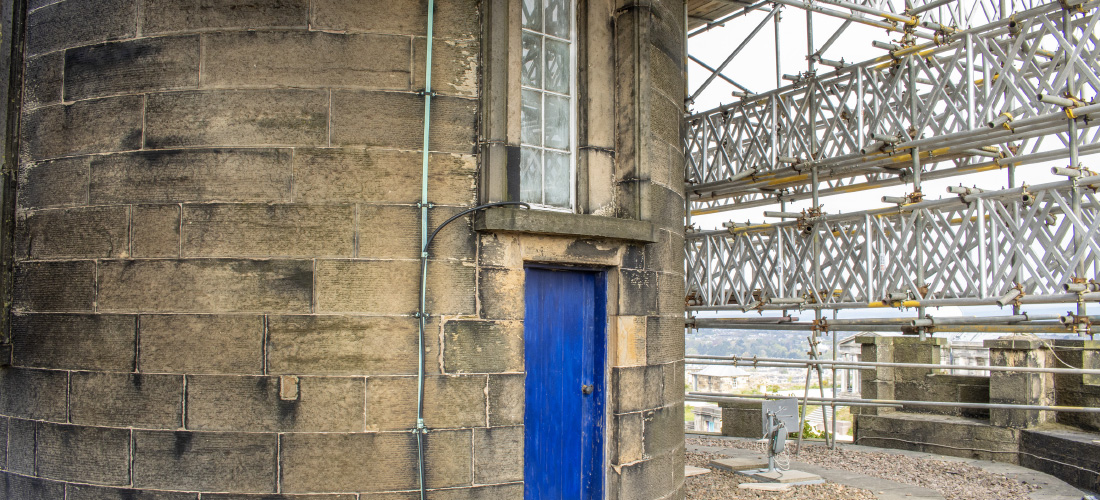
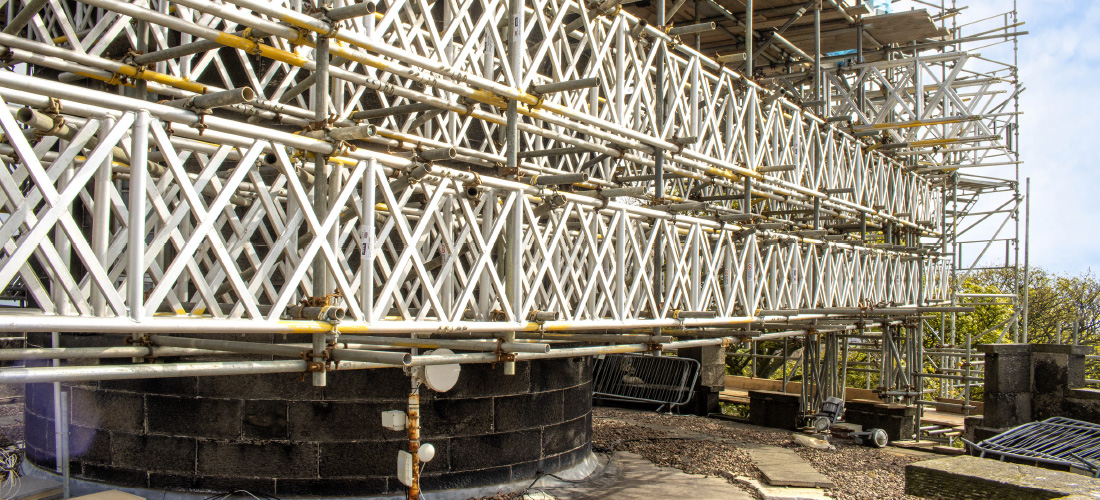
The 12-lift scaffold was bespoke-designed and engineered to fully encase the circular Grade A-listed tower. Due to restrictions on supporting the scaffold directly from the structure and to avoid compromising the building’s integrity, the design required careful consideration. Additionally, most of the traditional tube-and-fitting scaffold components had to be supported by X-Beams because of unsafe ground conditions around the monument’s perimeter.
A HAKI staircase was integrated into the scaffold to allow tradespeople to safely access multiple levels simultaneously and transport materials efficiently to designated work areas. Debris netting was installed around the full height of the scaffold to safeguard the public, including tourists, from any risks associated with potential falling debris during refurbishment and surface preparation. We also installed a temporary roof with sheeting to create a weather-tight enclosure above the dome housing the timeball.
This cost-effective, innovative temporary access solution enabled Ashwood Scotland, appointed by the City of Edinburgh Council, to efficiently conduct inspection and restoration of the external walls and windows as well as to reinstall the timeball mechanism to full operational status.
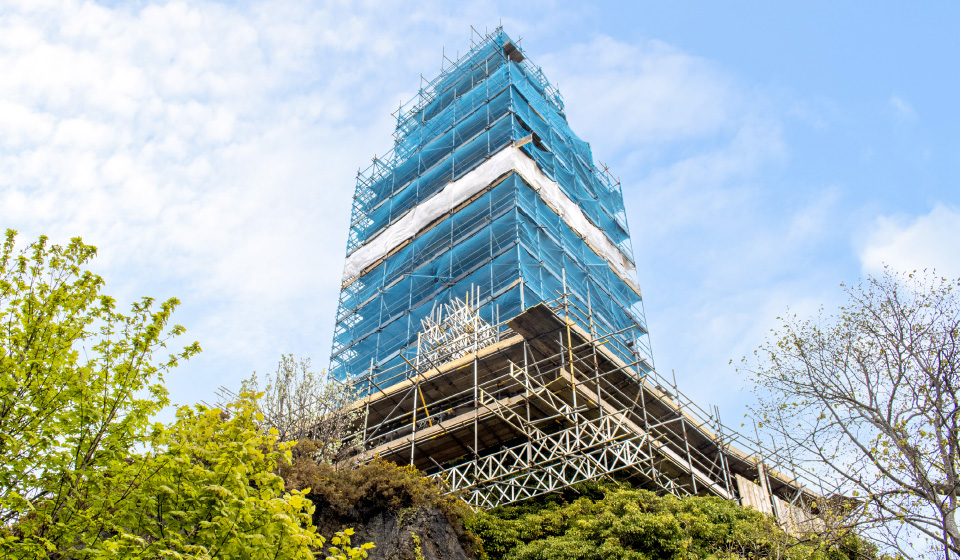
Value Engineering
Despite the challenges posed by multiple feasibility considerations during the initial planning and design stages, we internally assembled a specialist team to execute this project. Given the complexity, we collaborated with all stakeholders and consulted our operational team to develop a fully coordinated plan before mobilising on-site.
Our operational team also organised an experienced team of scaffolders to erect the structure and carefully coordinated all logistical equipment deliveries, as the monument is located in a heavily trafficked tourist area.
To facilitate this, Ashwood Scotland created a safe, designated access route for our vehicles to deliver scaffolding-related materials closer to the structure, with equipment stored in a fenced-off laydown area in preparation for the scaffolders to start erecting the temporary structure.
Overall, the project was successfully completed without setbacks, and the commemorative tower is now fully refurbished for future generations to enjoy.